Summary

Chronic degenerative diseases are among the most common today, having an impact on morbidity, mortality and public healthcare programs. Cancer, neuropsychiatric and cardiovascular processes affect the population frequently and are associated with inherited or acquired genetic mutations. Early prevention and detection methods of these pathologies increasingly require exams that guide the health professional towards better results.
New technologies empowered by artificial intelligence are necessary for cost reduction and precision in genetic test results, which when used in large scale within the community, make possible the creation of data that will help in feedback collection.
However, in spite of favourable conditions, the market does not yet utilize this precision tool for disease diagnosis. In contrast, the corporate world only works with data, for all activities, from object construction to business development and social media.
The commercial association of genetic tests and a biobank is the new market trend.
Products and Services
Genetic Tests
Genetic Tests
Genetic Tests

Procedures that use samples of biological material, such as blood and mucosal swabs, which are processed to extract DNA from the cells and sequenced in the entire genome or of the parts defined as genes.
Biobanks
Genetic Tests
Genetic Tests
Repositories of genetic and socio-environmental data from a population group, used in a wide range of commercial activities, such as disease analysis, consumer behavior, diets, or even the creation of new products. They are widely acquired by governments, the manufacturing industry, universities and researchers.
About PreventGen
PREVENTGEN BIOTECH LTDA is a Portuguese company, whose stakeholders have experience:
In the oncology segment in the UK, Brazil and Portugal
In international medical genetic research
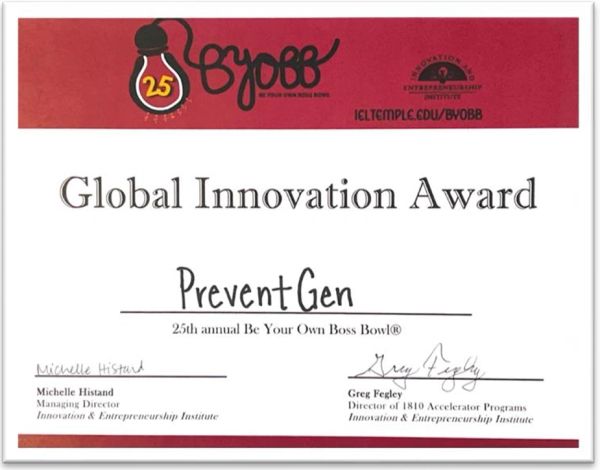
Awarded in the USA in a Biobank project with the Global Innovation prize
Our History

The PreventGen team has a history of ventures in the healthcare sector, in Brazil, Portugal and UK.
In Cuiabá, state of Mato Grosso, we participated: (i) in the Hospital de Câncer de Mato Grosso foundation; (ii) creation of Santa Rosa Hospital; (iii) and chaired a Social Health Organization (OSS) focused exclusively on cancer research.

In Portugal we obtained, through a public tender, a license to build the Oncology Center in the Aveiro district, installed at the Europark in Santa Maria da Feira, currently owned by the Spanish group Atrys.

In London we built and sold a clinic of oncology prevention.
Currently, we hold shares in a company that has a contract of management outsourcing of an oncology medical team for the health insurance company, HAPVIDA, which has 16 million users.
Development of new businesses
PreventGen intends to expand its area of operation, towards the European market, particularly in Portugal, developing partnerships with universities and technology companies in genetics and bioinformatics.
Another market under analysis and preliminary negotiations is the Persian Gulf.
Gulf countries, such as Bahrain, Qatar, the United Arab Emirates, Kuwait and Saudi Arabia, have a market to be evaluated.
PreventGen


Consultants


